
The Colegio de San Francisco de Sales, San Miguel de Allende, Mexico
Updated April 10, 2024
This photograph of the roofline of the Colegio de San Francisco de Salas, in San Miguel de Allende, Mexico, is a personal favorite of mine among the thousands I have taken in this beautiful UNICEF World Heritage colonial city. Photos of San Miguel are some of the easiest photos you can take. It’s all but impossible to look in any direction without seeing something your lens will scream to capture. The colors, the colonial lines and curves, the light! It all begs to be captured forever.
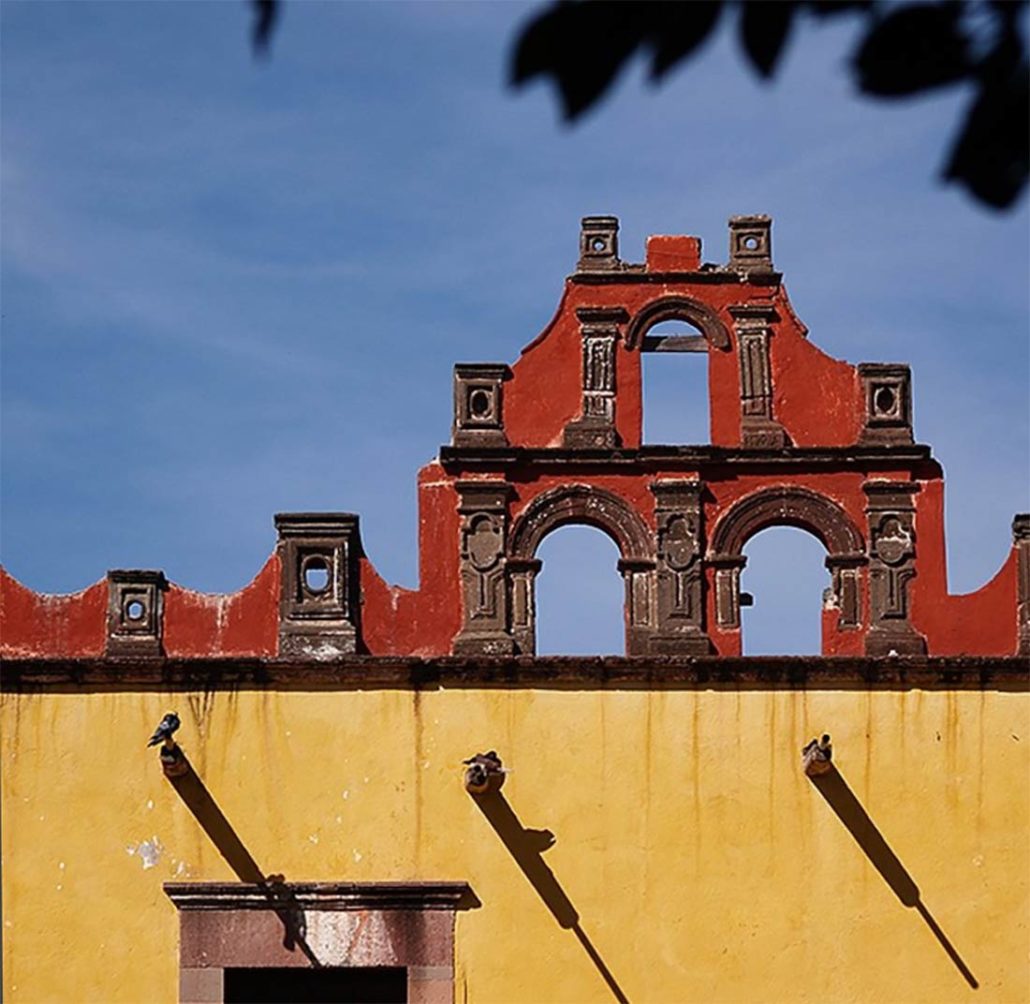
This is a picture I shot a few years ago, but the view hasn’t changed a bit. It could have been taken yesterday. Or a hundred-plus years ago if they’d had really good color film back then. It shows the skyline of the Colegio de San Francisco de Sales, located on the Plaza Cívica, next to the church of Nuestra Señora de la Salud. The building and the pleasant plaza in front of it are about three minutes walk from the Jardín, which today is San Miguel’s main square.
Since we Nomad Women tend to have a few years on us and therefore understand the importance of history, we often like to know a bit about the past of what we’re seeing. We like to know the stories behind the buildings. So….
A Brief History of the Colegio de San Franciso de Sales
The Colegio was created in the early 18th century by the priests of the order of San Felipe Neri, who also built the church next door.
The square in front of the church and the school, now the Plaza Civica, was called Plaza de la Soledad at that time, and it was the heart of town 300 years ago. The Town Hall was here. So was the main market and the most important churches. The addition of the college topped it off. This was the principal crossroads for business, religion, leisure, and commerce in this important and wealthy colonial city.
Construction of the college began in 1727. It had two floors and was designed in typical Spanish Colonial style, with a central patio with a fountain to provide water for the building. The patio was surrounded by corridors lined with arches, like most colonial-style houses.
The school library was upstairs, and the building had direct communication to the church next door. There was also an orchard of fruit trees.
The belfry we can see in the center of the roof line indicated that it was a “Royal” school, with a certificate issued by the Royal Viceroy of the colony.
Not many years after it began, the Colegio de Sales was considered the most important school in Mexico. Evidence of its importance to the region—and indeed, the entire country—is the fact that the school granted 156 bachelor’s degrees in arts between 1744 and 1767, more than any other Colegio in Mexico.
A Study in Diversity
The Colegio de San Francisco de Sales was unusual in that it catered not only to criollos, the privileged sons of the rich Spaniard families that had created the town. It also educated deserving poor students.
To earn the right to enroll, students had to have an evaluation. The price of enrollment was on a sliding scale and cost between 12 and 300 pesos a year–at a time when a common laborer earned about one peso a day. They had a “food scholarship” based on “chocolate, bread, mutton, butter, beans, chicken, and seeds.”
The courses of study at the Colegio included Theology, Rhetoric, Grammar, and Philosophy. Students wore different colored uniforms, depending on their course of study.
- Grammarians (red)
- Rhetoricians (blue)
- Philosophers (green)
- Theologians (white)
In addition, they all wore a turquoise blue cloth with a badge of the colors according to their group. The whole ensemble was topped off by a hat “of black cloth of the first quality.”
Thou Shalt Not Leave
An interesting note I discovered while researching this place: Once admitted, the students were not allowed to leave the building during the term year, except for emergencies. A doctor and an apothecary visited the school every week, so there was seldom a need for them to leave.
San Miguel’s namesake, Ignacio Allende, studied here, as did another Hero of Independence, Juan Aldama. I like to imagine them running across the central patio on their way to a Latin class, maybe cutting up a bit and earning a frown from one of the priest-tutors. Or perhaps they had a propensity for sneaking out of the building when no one was looking, to race off to the nearby market for a pan dulce between classes.
Did they have any idea then that not so many years later they would change the entire course of Mexican history? And that they would pay for that change with their very lives?
The End of the Colegio but Still Life for the Building
The school was closed at the end of the 18th century. A few short years later, it was used as a prison to house (and protect) Spanish loyalists during the War for Independence.
Later, it served many purposes, including the commercial use we can see in the photo below, taken in the late-19th-early-20th century. Fortunately, in all those years, it was never substantially changed architecturally.
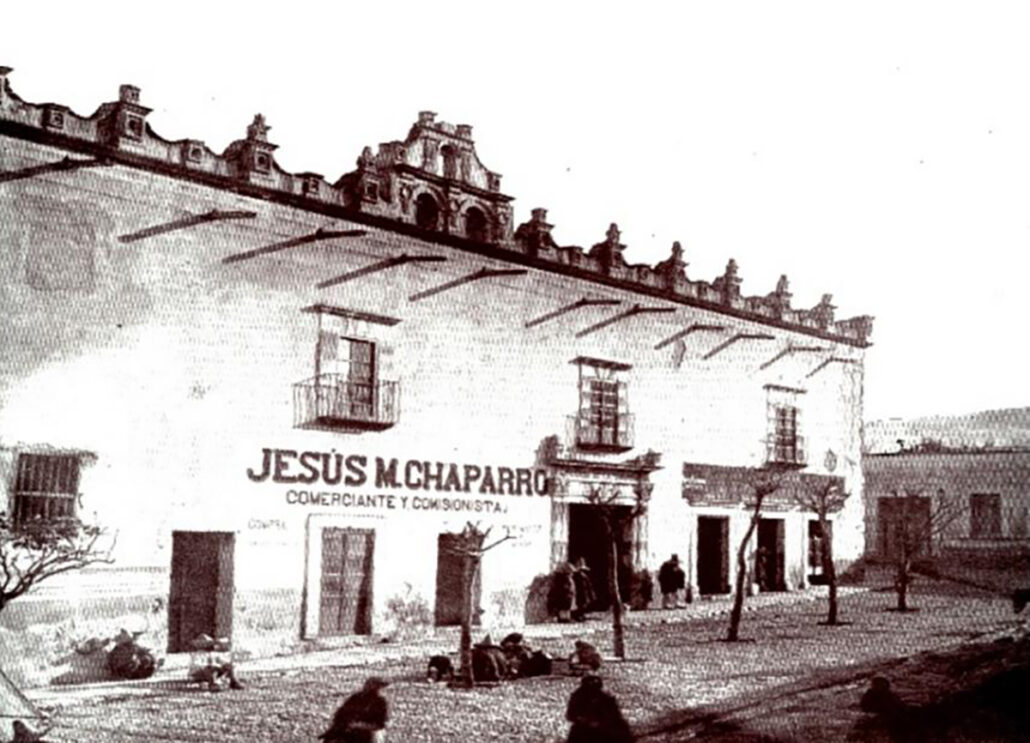
Today, the building is still little changed from the day it was built. In fact, it once again serves as a center of higher education.
Today it houses a branch campus of the University of León.
Pin it For Later


Thank you for providing the background to your beautiful photo.
Thank you such a kind comment, Katherine.
I spent four days in San Miguel de Allende and found it charming. A large English language library was a surprise. The independent movie theatre a treat. Several restaurants with delectable food and best of all, the thermal spa/pools.
I agree SuZanne. It is magical town. I will be posting a lot more content about San Miguel, including all the things you mentioned.
The photos look fabulous Donna. San Miguel has long been on our list; learning a bit more about its history only adds to the appeal.
Ryan
Hello Donna, the Colegio was functioning in the 1880s; one of my great-granduncles was the president, according to a document from Bishop Sollano y Davalos from Leon. If you want, I can provide you with a partial copy.
Francisco
How fascinating to know that about your ancestor. Thanks for sharing that info with me.