
Paris Greeters – Come as a Visitor; Leave as a Friend
Have you ever traveled to a city where you had a friend who lived there? If so, didn’t seeing the city with a local enhance your experience many times over? That’s what you get with a walk from the non-profit organization Paris Greeters. Their volunteer “greeters” will walk you around their favorite neighborhood in a way you really can’t get on your own. Their motto is “Come as a Visitor; Leave as a Friend.”
I’ve done this twice now (and hope to do it again). Both times I found it a fascinating, friendly, and fulfilling way to see the City of Light. And it’s free. Let me tell you more about it and how you can do it too.
Let’s Take a Walk—and Why We Should
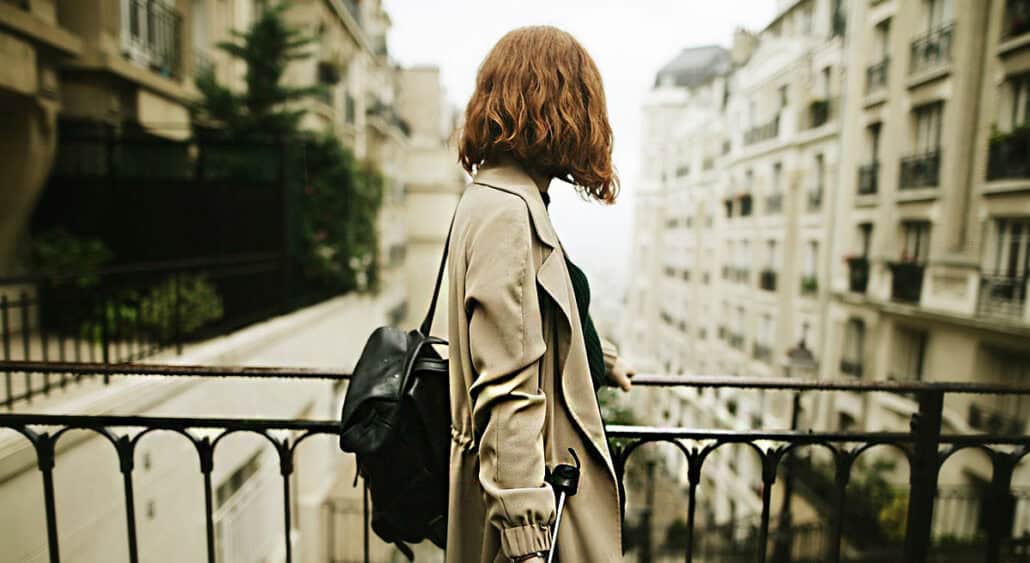
One of my favorite ways to see any new city, and get myself oriented as well, is to just go for a long walk. I like seeing a city slowly and at eye level, whether that’s climbing the hills of Lisbon or San Franciso, walking the canals in Amsterdam, or strolling along a jacaranda-lined avenue in Mexico City.
You can do this alone, with a traveling companion, or as part of an organized walking tour. I’ve taken several group walking tours—in Stockholm, Hamburg, Heidelberg, Copenhagen, and other cities—and they can be a great introduction to a place.
Even better is to hire a guide for a private walking tour (as I did in Prague), where the pace and the sights covered can be tailored to your individual interests and abilities. But these can be pricey, running into the hundreds of dollars for a small group.
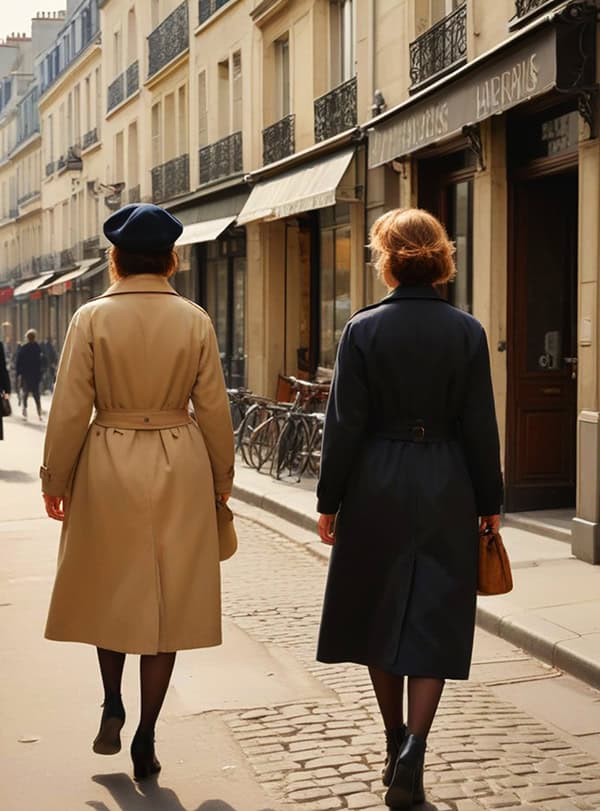
In Paris, I discovered the very best way to get a private, curated-for-you walk around a Parisian neighborhood is to do it with a volunteer from Paris Greeters.
But What Exactly IS Paris Greeters?
The non-profit association was founded in 2007 as part of the Global Greeter Network, an international initiative that began in New York City. The philosophy behind it is simple: to promote cultural exchange and foster a sense of community by offering free, personalized walking tours led by locals. These volunteers, known as “greeters,” are passionate Parisians who love their city and want to share its hidden gems and personal stories with visitors.
What sets the group’s work apart from traditional guided tours is the focus on genuine, informal interactions. There’s no set itinerary or script; each walk is tailored to your personal interests as a visitor and the unique knowledge and insights of the greeter. It’s like having a friend show you around their hometown.
What Does a Paris Greeter Do?
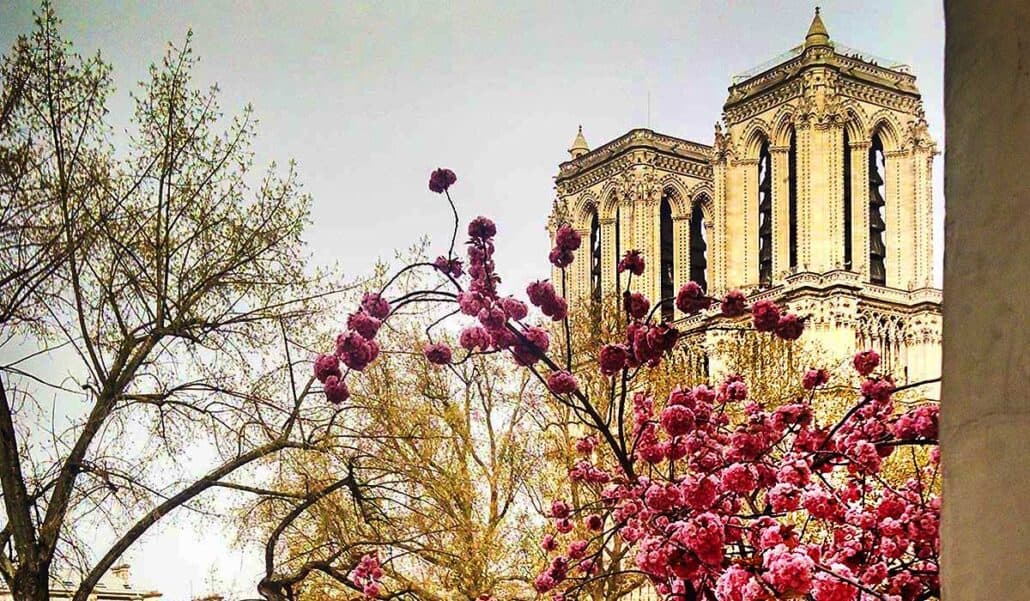
The answer to this question is straightforward and quite simple. They take you for a walk. There are some 400 volunteers who are passionate about the City of Light and love showing her off, in depth and with the kind of detail and inside info only the locals know.
Often these volunteer guides were born and raised in the arrondissement they’ll walk you around. Or their parents or grandparents were. They know what’s behind the doors and gates and which ones can be pushed open to uncover the secrets inside. More often still, by the end of your 2-4 hours together, they’ve become more than just a guide. They have become your Parisian friend.
What Can You Expect from Your Neighborhood Stroll?
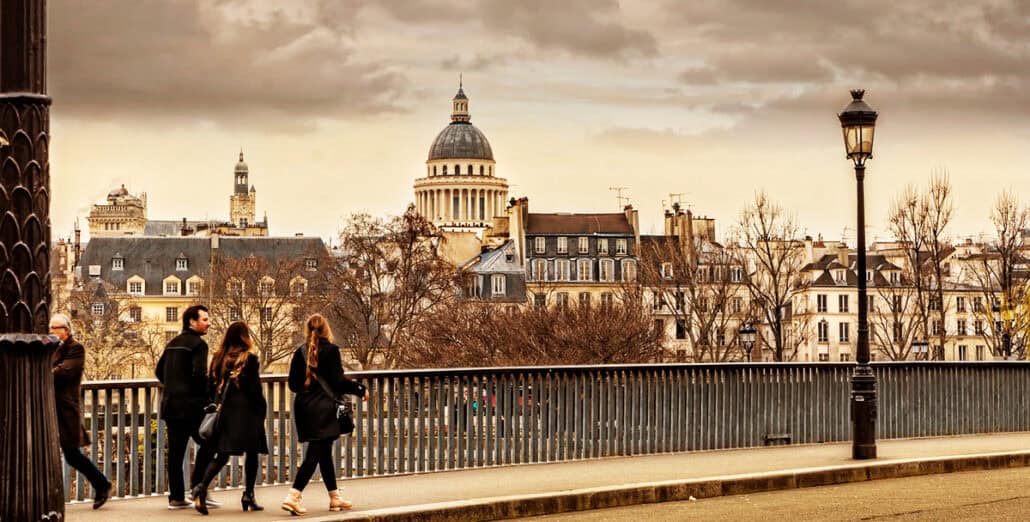
One of the best things about Paris Greeters is the variety of walks available. Each greeter has their own favorite spots and areas of expertise, so no two walks are the same. The focus is on genuine, informal interactions. If your walk goes through Le Marais, your guide might point out centuries-old synagogues and lead you into hidden courtyards and art galleries you’d never find on your own. Or perhaps they’ll take you to their favorite vendor at the oldest covered market in Paris (standing since 1628), the Marche Couvert des Enfants Rouges, which the locals call “the village square.”
Maybe your walk will take you to the Canal Saint-Martin, to watch boats navigate the locks and locals relaxing by the water. Your guide might explain the rules of the lively game of boules going on at one of the sandbank.

Because every Greeter is unique, no two walks are ever identical. You get the personal insights and stories of your guide as well as seeing what’s in front of you.
But is it Really “Free?”
There are “free” walking tours offered in cities all over the world, but they’re not truly free. They’re “pay what you can.” The guides survive on tips from their visitors and are not hesitant to ask for them. And though you are, of course, free to skimp them, I do hope you won’t. It’s their job and they are usually pretty good at it.
But Paris Greeters is not like that. It’s actually free. The guides neither ask for nor accept tips, though you are welcome to invite them for a coffee if you wish at the end of your tour. You will be cordially invited, without pressure or follow-up, to make a donation to the non-profit organization, which you can do on their website. I was happy to contribute for both of my walks, to help support the program and allow it to continue offering these incredible experiences.
How Does the Paris Greeters Program Work?
Arranging a stroll with a volunteer is easy. Just visit the Paris Greeters website. Click on “Meet a Greeter,” and fill in the registration form. You’ll be asked for your basic info, your preferred language, and a phone number for while you are in Paris for What’s App or SMS messaging.
On the second registration page, you’ll fill in your preferred date and two possible alternate dates for your stroll (if that’s possible). Then there are boxes to tick off for your particular interests. The choices are:
- History (Big & Small)
- Architecture & Urbanism
- Gastronomy & Open Markets
- Antiques & Flea Markets
- Gardens & Green areas
- Youngsters
- Daily life
Based on your choices and dates, they’ll match you with a volunteer and give you each other’s contact info. From that point on, you connect directly with your guide to arrange the timing, where to meet, and any other necessary logistics. It’s pretty common to meet up at the nearest Metro station, but be sure you are clear on which exit to use.
Both times I used the service, I had plenty of communication with my guides ahead of time, so we were both clear on exactly how to find each other and when. We also messaged about what I wanted to see or learn and what was expected with the weather.
By the time I showed up at the meeting point, I felt ready and eager to see Paris in a whole new way.

My Paris Greeters Reviews for Two Strolls
My first stroll was to a neighborhood entirely new to me, even though I had visited Paris several times by then. I knew—vaguely—that Montparnasse had been the hub for artists, writers, musicians, and intellectuals between the two World Wars. I was looking forward to walking in the footsteps of such “Montparnos” as Hemingway and Anaïs Nin, seeing the sites that inspired Picasso and Modigliani’s paintbrushes, or imaging the philosophical discussions between Jean Paul Sartre and Simone de Beauvoir and their bright friends.
The Montparnasse of Artistic Ferment
My guide was Jean-Paul, an older gentleman who was a retired history professor from the Sorbonne. His English was excellent and his knowledge awe-inspiring. His sense f humor and the twinkle in his eye were icing on the cake.
We started near the Montparnasse Tower, a 700-foot (213-meter) gray-brown modern aberration towering over the neighborhood like the opening monolith in 2001 Space Odyssey. This skyscraper—Paris’ least beloved building—is so ugly and detested that its birth caused new laws to be passed so it would never be copied anywhere within the original city.
We didn’t go to the top, though Jean-Claude assured me it had the best view in all of Paris—better even than the Eiffel tower—because…you didn’t have to look at the Montparnasse Tower from up there.
Next we wandered a short distance to the Gare Montparnasse, the train station for trips heading west and southwest from Paris. Not much to see here, I was thinking until he led me through a passage and suddenly we were in a beautiful public garden. On the roof of the train station.
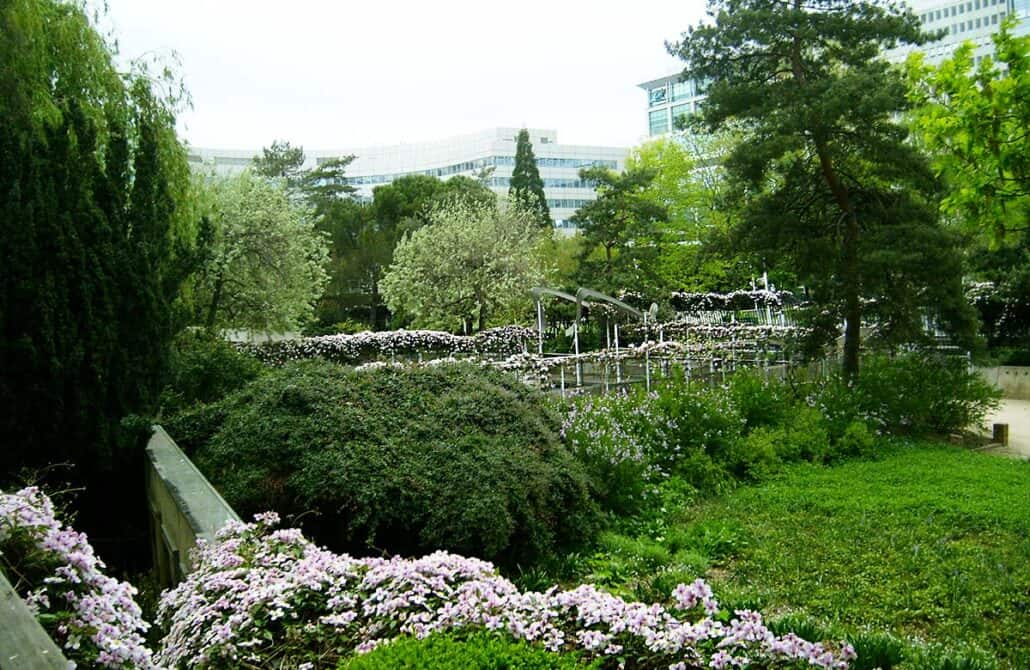
The Jardin Atlantique is almost 8 ½ acres/3.4 hectares of lawns, trees, water features, flowers set above the station’s tracks and platforms. There’s a section of undulating grasses and one full of aquatic plants. Large pine trees are set in box planters. There’s even a meditation garden
Who knew? I never would have found this lovely spot on my own.
Seeing Where the “Montparnos” Lived and Worked
We climbed back down from the garden and headed into the streets. I followed wherever Jean-Claude led me, into café-lined boulevards and cobblestoned lanes. While we walked, he told stories about the history of the area, and especially about the artists, writers, and other “Montparnos” who lived, worked, and partied here.
An Artist Corner at 21, Avenue du Maine
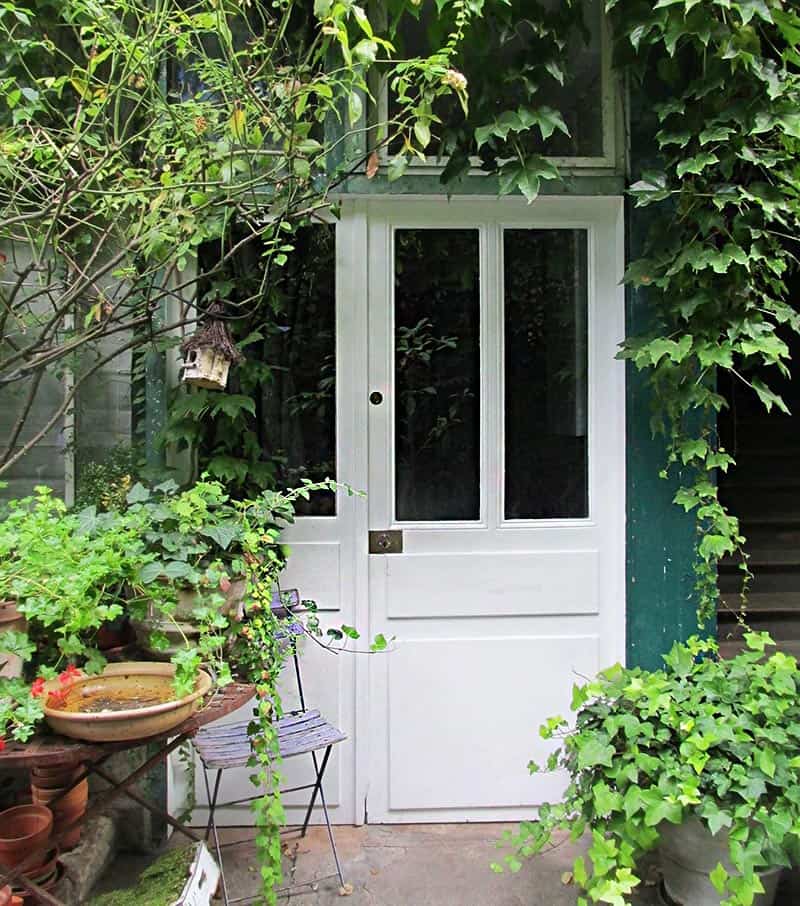
A favorite spot for me was a cobblestoned cul-de-sac, enveloped in greenery, to see the Villa Vassilieff. This hive or artistic life in the 1910s-1920s is named for the Russian painter and scilptor Marie Vassilieff. She had been a student of Matisse.
In this charming tiny alley, she set up her studio, but also set aside space for other artists to work and live.
In 1920, Marie opened a canteen in the building franc-pinching painters like Picasso, Modigliani, Soutine, and Chagall could get a full meal for 50 centimes, a rare bargain.
Some Never Left Montparnasse
Our next destination was Montparnasse Cemetery. We saw only a small part of the roughly 47 acres, the second largest cemetery in Paris with more than 35,000 graves.
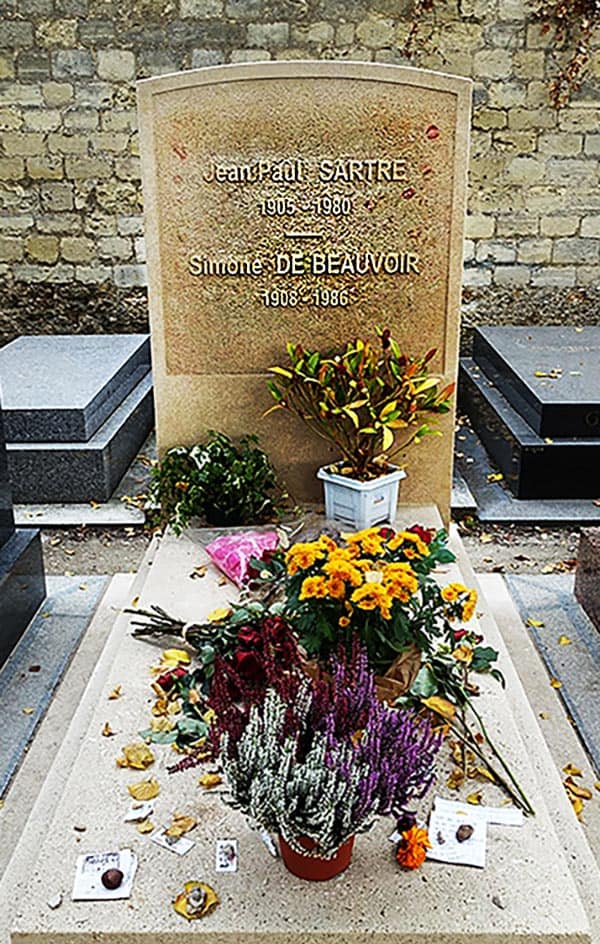
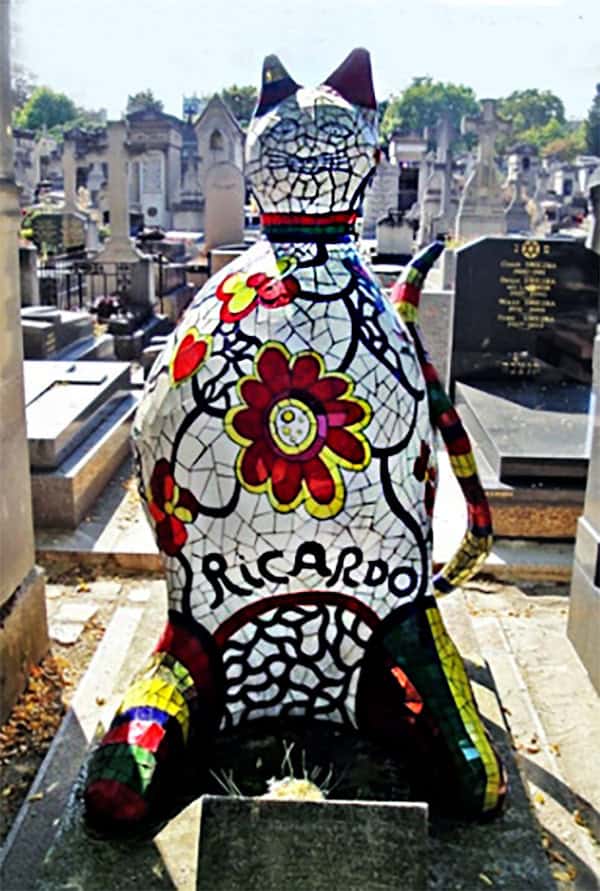
We saw the single grave of Jean-Paul Sartre and Simone de Beauvoir, forever united in death. Also, I liked seeing a grave decorated with a whimsical cat statue by sculptor Nikki de Saint-Phalle. Other luminaries buried here include Marguerite Duras, Charles Baudelaire, and Samuel Beckett.
Montparnasse in the ’20s: a Who’s Who of Talent and Art
The afternoon was wearing down as we strolled back to the streets while Jean-Claude regaled me with more stories of the lively life of the neighborhood in the early 20th century. We headed to Blvd Raspail where it crosses Blvd Montparnasse, the site of the four famous (and infamous) cafes where this cauldron of talent, thought, and philosophy bubbled: La Couple, Le Select, Le Dome, and La Rotonde.
To give you some idea of the artistic ferment of the period, here’s just a partial list of some of the Montparnasse denizens, in addition to those I’ve already mentioned.
- Loie Fuller, the great modern dancer
- Andre Breton
- Max Jacob
- George Gershwin
- Diego Rivera
- F. Scott Fitzgerald
- Fernand Léger
- Tristan Tzara, founder of Dada
- Paul Gauguin
- Jean Cocteau
- Louis Aragon
- Marcel Duchamp
- Eugène Atget, the iconic Paris photographer
- Giorgio de Chirico
- Rainer Maria Rilke
- Guillaume Apollinaire
- Robert Capa
- Henri Cartier-Bresson
- Man Ray
- Vassily Kandinsky
- Vladimir Lenin
- Leon Trotsky
- Josephine Baker, with Chiquita, her pet cheetah
As the afternoon came to an end, I invited my guide for a coffee. We grabbed a couple of the red rattan seats on the terrace of La Rotonde.
It was a favorite of Hemingway, and especially of Modigliani, who, it is said, often paid for his dinner here with a drawing. I snuck a peek inside to see that it is all red velvet banquettes, brass fixtures, and red-fringed hanging lamps. Modigliani portraits dot the walls.
By this time, Jean-Claude and I were chatting like old friends, sharing insights of my life in the US and Mexico and his in Paris. The café créme was much welcome and put the perfect period to this completely satisfying and delightful afternoon.

The Elegance of the 7th Arrondissement
The next time I was in Paris, a year or two later, I registered for another Paris Greeters stroll. This time, the walk was in the 7th Arrondissement, near the Eiffel Tower. My guide was Jacqueline. And since it was a Saturday, her husband Etienne joined us and brought Mick, their loveable, sloppy-friendly golden retriever. Jacqueline grew up in the neighborhood, and Etienne’s grandmother had lived here too. He pointed out her corner apartment with an Eiffel Tower view where he loved to play as a child.
This clearly affluent neighborhood is a treasure-trove of monuments, grand museums, wide tree-lined boulevards, fine restaurants, and fashionable boutiques. Upscale food shops are dotted everywhere.
Where Art Nouveau Abounds
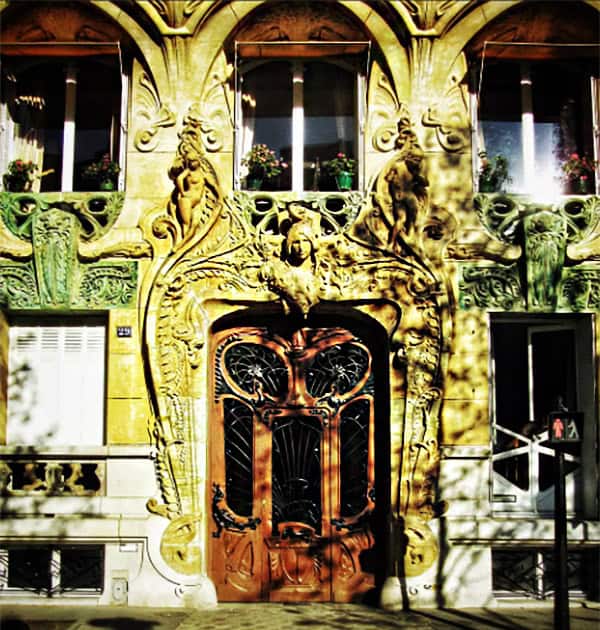
I’d told Jacqueline before the walk that I was interested in architecture, and she did not let me down. The neighborhood is full of gorgeous Art Nouveau facades, including several by architect Jules Lavirotte. His lavish style, full of human and animal sculptures, trailing vines, and sinuous lines, won the city’s Paris façade competition three times.
We hung out for a while in front of his masterpiece, the astonishing Lavirotte Building at 29, Avenue Rapp. The fancifully carved doorway embellishment includes a sculpture of his wife, her neck wrapped in a fox stole. There are so many details to take in, the entire building deserves some time and close scrutiny.
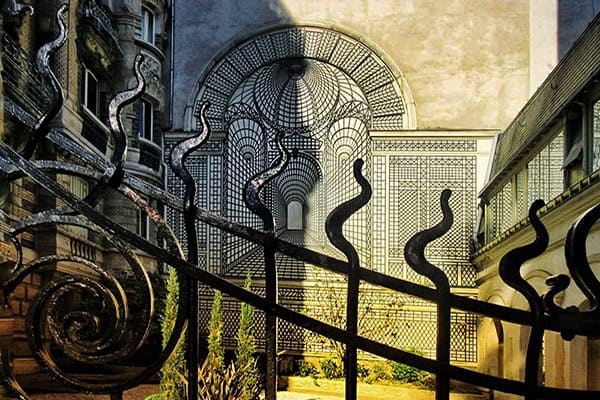
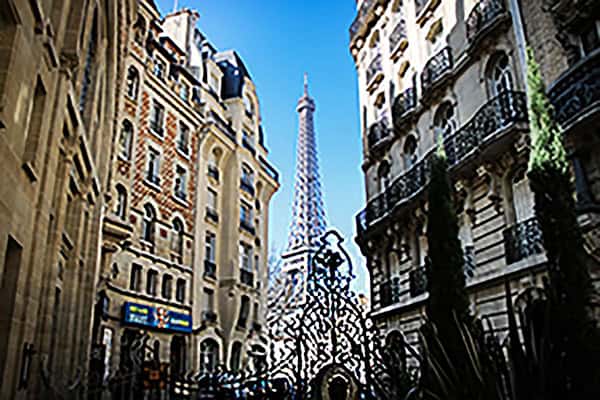
Just around the corner is the small Square Rapp, where a tiny courtyard with a perspective-bending graphic on the back wall is enclosed by a Lavirotte-designed fence. My camera finger was busy. Then Jacqueline pushed open the gate. We walked into the courtyard, and she told me to turn around. I gasped as I saw the Eiffel Tower so perfectly framed by buildings and the wrought-iron curlicues of the fence. More snap snap.
As we continued walking, my guides pointed out the bullet holes in the wall of the grand École Militaire, reminders of the street battles of World War II.
And everywhere we walked, there was the Eiffel Tower, just over there, peeking through buildings, putting an exclamation point on a street’s perspective.
We ended our walk with a café crème at the café La Fountaine de Mars, a perfect end to a lovely afternoon.
Conclusion? A Paris Greeters Walk is Highly Recommended
Both of my experiences with Paris Greeters were highlights of my trips. They offered me a different perspective on a city I already loved. They introduced me to some lovely Parisians (including one dog) I left as friends.
Whether you’re a first-time visitor to the City of Light or have been a dozen times, I can guarantee you’ll see some aspect of the city you never knew or would have guessed. Seeing it through the eyes and cultural lens of a passionate local is an experience not to be missed.
More About the International Greeter Association
The International Greeter Association offers their free walks with locals in more than 150 destinations in 43 countries. In 2023, their 3900+ volunteer greeters carried out more than 16,500 walks with visitors to their home areas.
To find out if there are volunteer-led walks in your destination, go to the organization’s website. Scroll down the page till you see the list of countries where they offer Greets. Then click on the country of interest. Some have offers in many cities and towns, others only one or two. But the network is always growing.
You’ll also find information on the website about how to become a greeter yourself and how to set up a program in your own hometown. Spread the love!
Pin it for Later


What a clever idea. I would definitely try this and I would be happy to donate.
Thanks Jolayne. Yes, a donation seemed like the least I could do for my lovely Paris strolls with these interesting and comfortable people showing me the real city.
Taking a walk with locals is certainly the best way to get to sights off the tourist track. I haven’t tried the greeters, but this sounds like a great idea.
YOu’re right, Sonia. It’s a great way to discover places and things you’d otherwise miss. I hope you have a chance to try it one day.
Exploring a city with locals truly adds a special touch to travel experiences. Paris Greeters seem to embody this essence perfectly! It’s inspiring to see how they share their passion for Paris through personalized tours. I appreciate the value of local insights in making journeys unforgettable. Connecting with locals in Paris sounds like a fantastic way to dive deeper into its charm and history.
I love this idea Donna. Walking is my favorite way to see a city because you experience almost everything and miss nothing, basically. We need to be mindful. But you really do get the full experience at ground level, moving at a slow, walking pace. Cool that Paris Greeters is free too. I dig it.
Ryan
Thanks, Ryan. It’s the first thing I always book once I’ve got my ticket to Paris. And it’s always been great.